


Microsoft Dynamics 365 for healthcare
Less administration. More time for patients.
Mason Pete helps healthcare teams explore how Microsoft Dynamics can reduce recurring tasks and make the patient experience better. We start with the people doing the work and the moments that matter to their patients.

Why this matters
Good systems should give people time to care
Peter Beentjes founded Mason Pete to help people work better with technology. Healthcare gives that ambition a very direct purpose: helping the people who look after others.
When a receptionist has to chase the same information, repeat a task or pass a question between colleagues, it takes attention away from the patient. We want to understand that work and help make it simpler.
In healthcare, people depend on the work being done properly. Our focus is the administration and communication around care. Clinical decisions stay with qualified healthcare professionals.
The Microsoft building blocks
Where Microsoft Dynamics can help a healthcare team
Microsoft combines Microsoft Dynamics 365 and Power Platform with healthcare data components and application templates. These provide a starting point for a solution configured around your organisation.
Handle patient enquiries
Microsoft Dynamics 365 Customer Service can bring patient conversations and follow-up work together.
Keep patients informed
Customer Insights – Journeys can support planned communication around the patient journey.
Connect the work
Power Apps, Power Automate and Dataverse can support workflows. Power Pages can provide a patient portal. Connections to existing systems need to be assessed.
We assess which parts fit your process, existing applications and licences before choosing what to build.
Explore the solution
A closer look at the daily work
These screenshots show Microsoft Care Management in our demo environment, using fictional data. The clinic use case has not yet been implemented.
Patient enquiry workspace
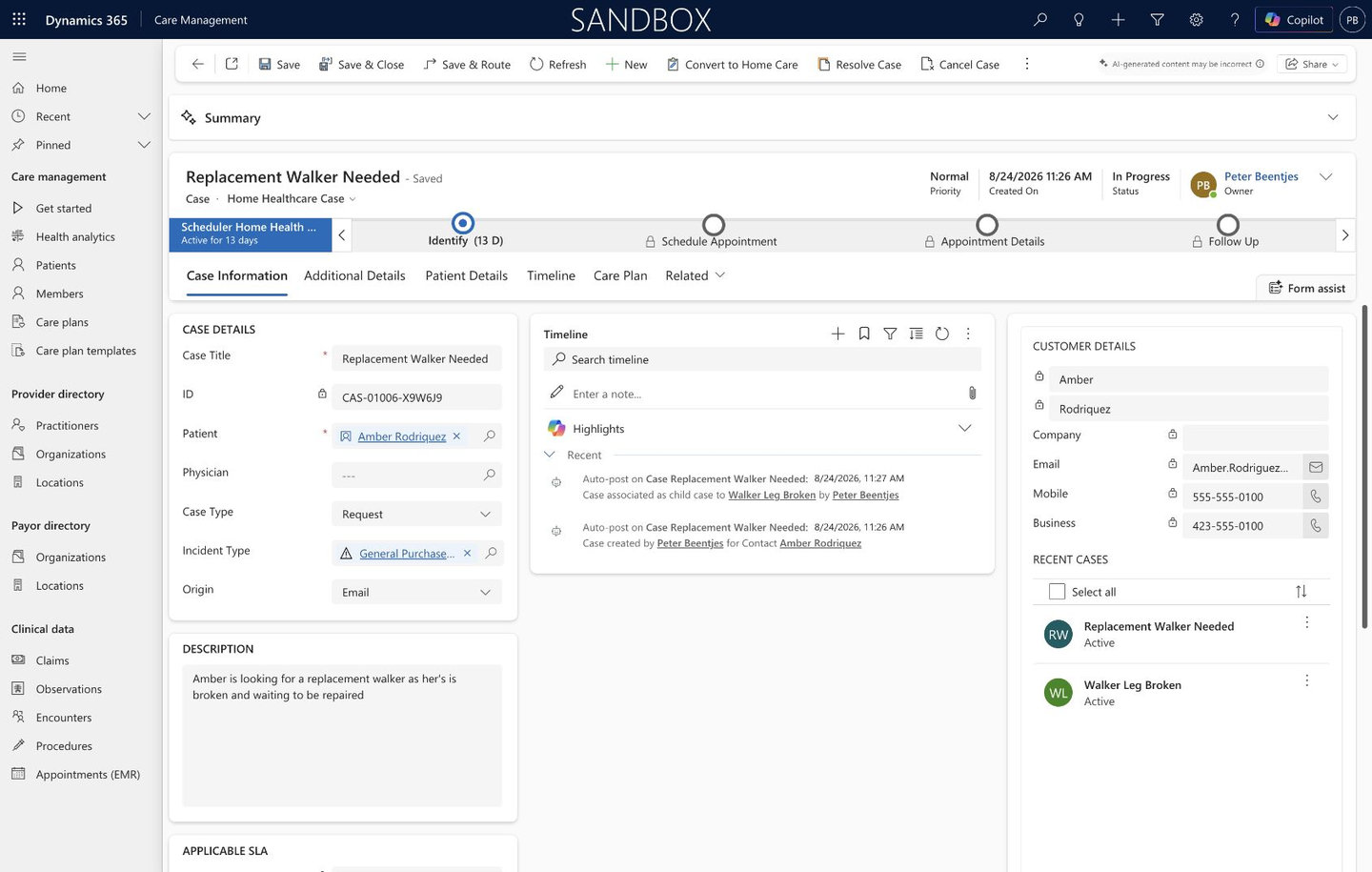
Demo environment · fictional data. A patient enquiry with a named owner, case history and a clear next step.
Patient interaction history
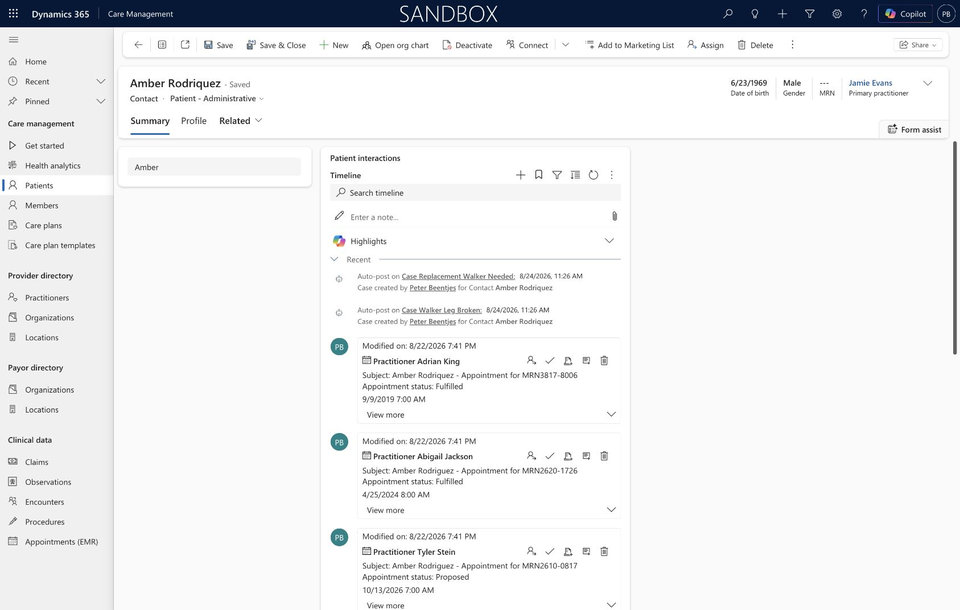
Demo environment · fictional data. A timeline of recorded patient interactions, appointments and case updates.
Care team and activities
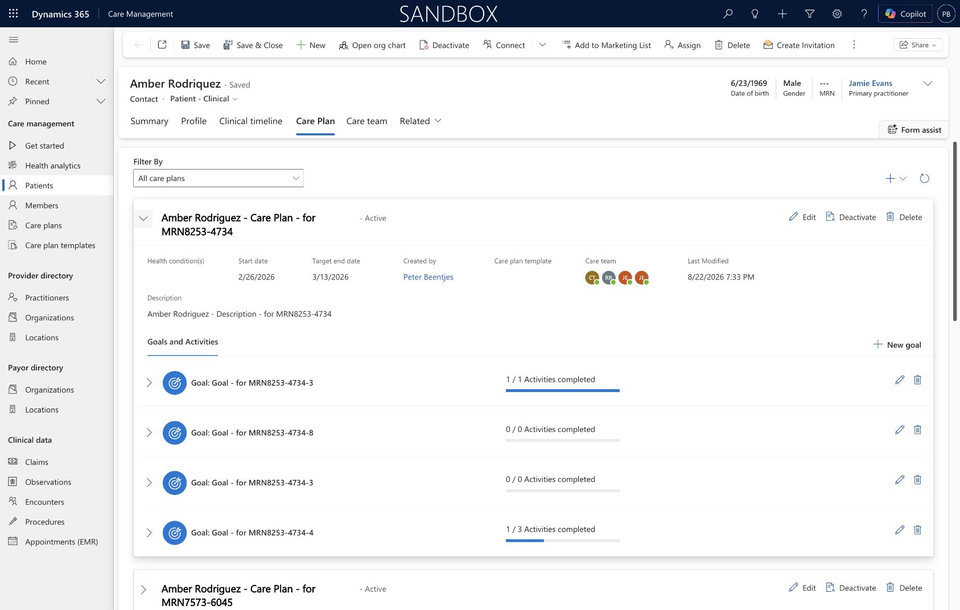
Demo environment · fictional data. Care team members, goals and activity progress shown together.
A use case we want to develop
Starting with a dental clinic
Mason Pete is currently in talks with a dental clinic about building a use case with Microsoft's healthcare solutions. The goal is to reduce recurring tasks for the team and improve the experience for patients.
The first step is to understand the clinic's daily work and agree which process to tackle. The examples below are possible starting points for that discussion.
Appointment follow-up
Could reminders and clear next steps reduce the time reception spends chasing confirmations?
Routine questions
Could the team handle practical questions about visits more easily, with a clear owner for anything that needs a personal response?
Fewer repeated steps
Could information already provided be used in the next task, so staff and patients do not have to repeat themselves?
The clinic work is at the discussion stage. The scope, implementation and results are still to be established.
How Mason Pete works
Choose one process. Test it with the team.
-
Understand the daily work
Walk through the process with the people who use it. Find the repeated tasks, waiting time and difficult handovers.
-
Agree on a useful first change
Choose a manageable use case. Check what the existing practice system already does and where Microsoft Dynamics could help.
-
Configure and test
Build a small pilot with sample data. Test normal tasks and exceptions with the team, including when someone needs to take over.
-
Check whether it helps
Compare time spent on the task, repeat contacts and staff feedback. Agree how to assess the patient experience before expanding the solution.
What takes time away from your patients?
Tell us which recurring task slows your team down. We can look at the process together and discuss where Microsoft Dynamics could help.
Start with the process and the problem; patient details are not needed for this conversation.